Engineered Hospitality Collections for Suites, Lounges & Dining
Precision-crafted casegoods, commercial joinery, and durable upholstery built to withstand heavy guest turnovers. Compliant with international durability, acoustic damping, and fire-retardant thresholds.
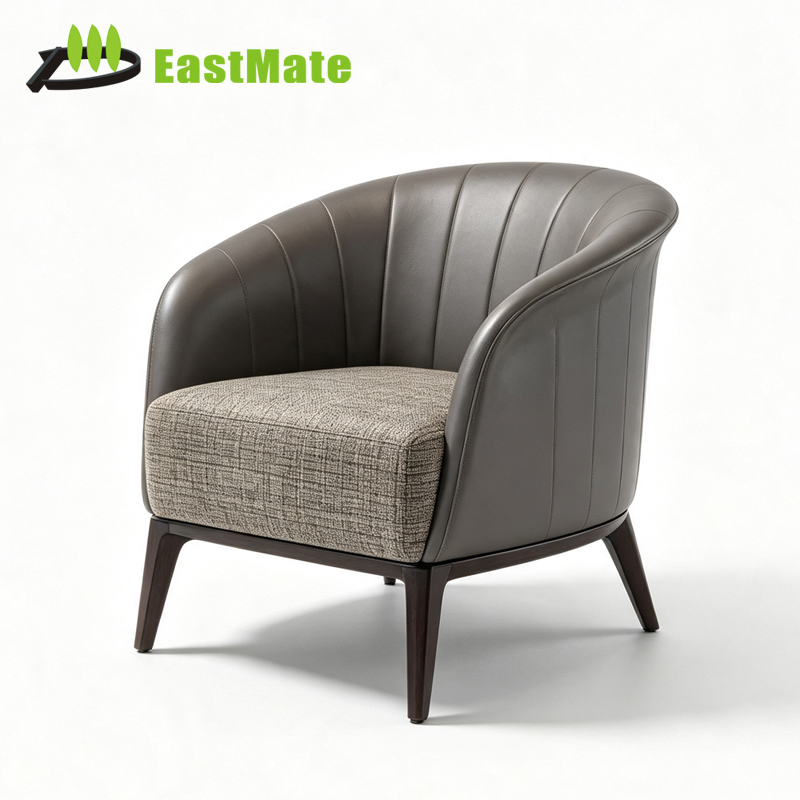
High-resilience mold-cure cushioning paired with reinforced internal kiln-dried hardwood framing. Engineered for luxury club suites and public lounges.
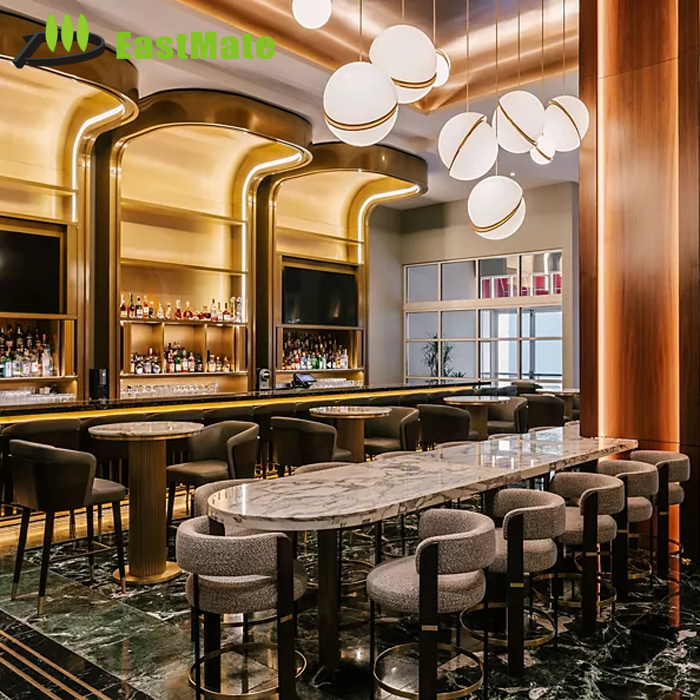
Solid timber dining tables and ergonomic dining seating designed for extended-stay suites, breakfast lounges, and commercial hospitality dining rooms.
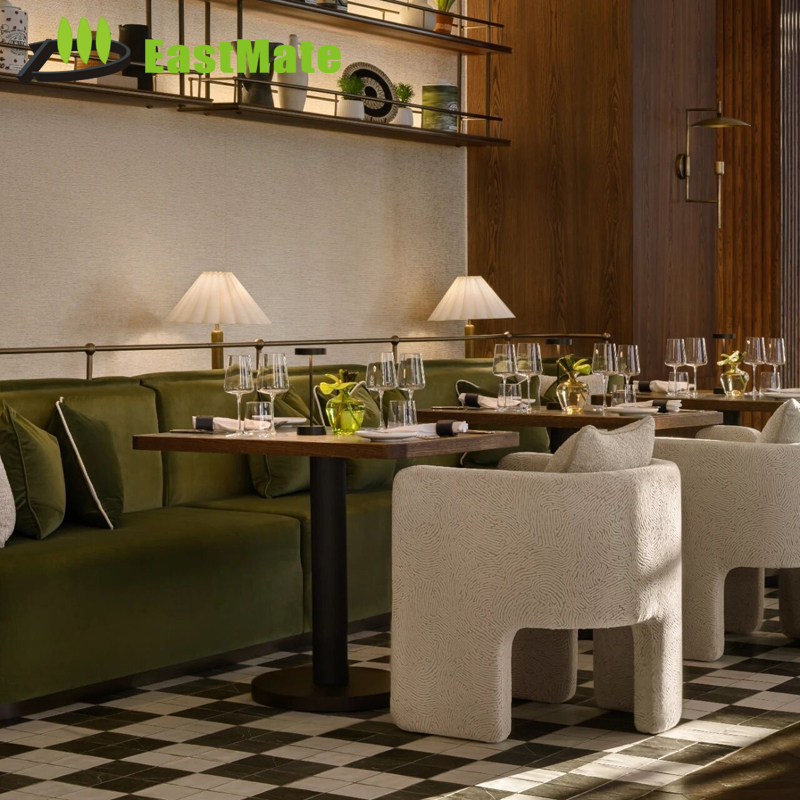
Natural composite and sintered stone surfaces bonded to solid ash or rubberwood substrates, with high-density upholstery built for high traffic.
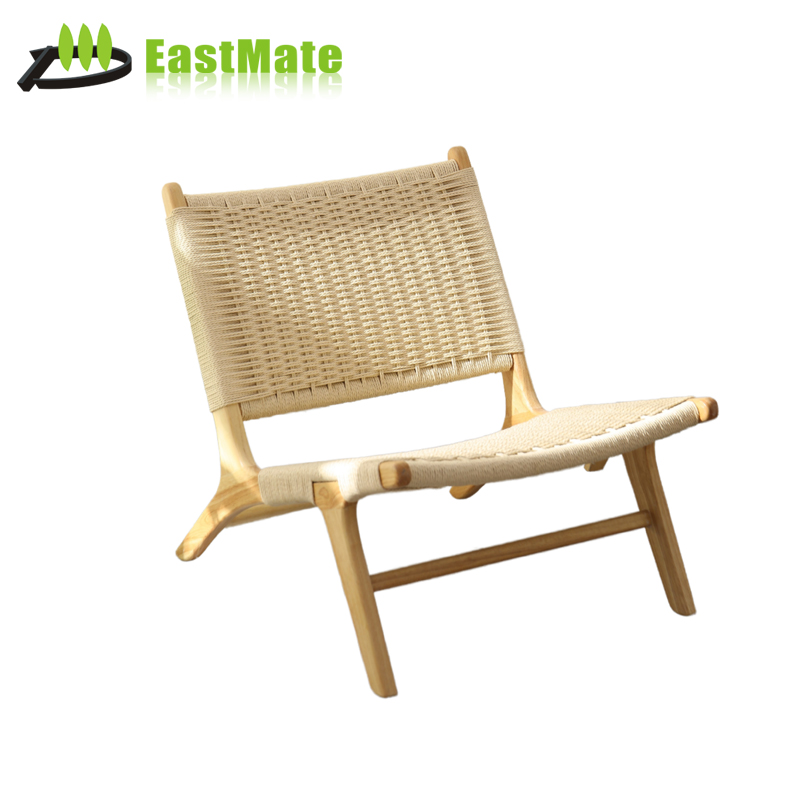
Refined angular timber profiles paired with a low center-of-gravity aesthetic. Perfect for boutique hotel sitting areas, suites, and executive villas.
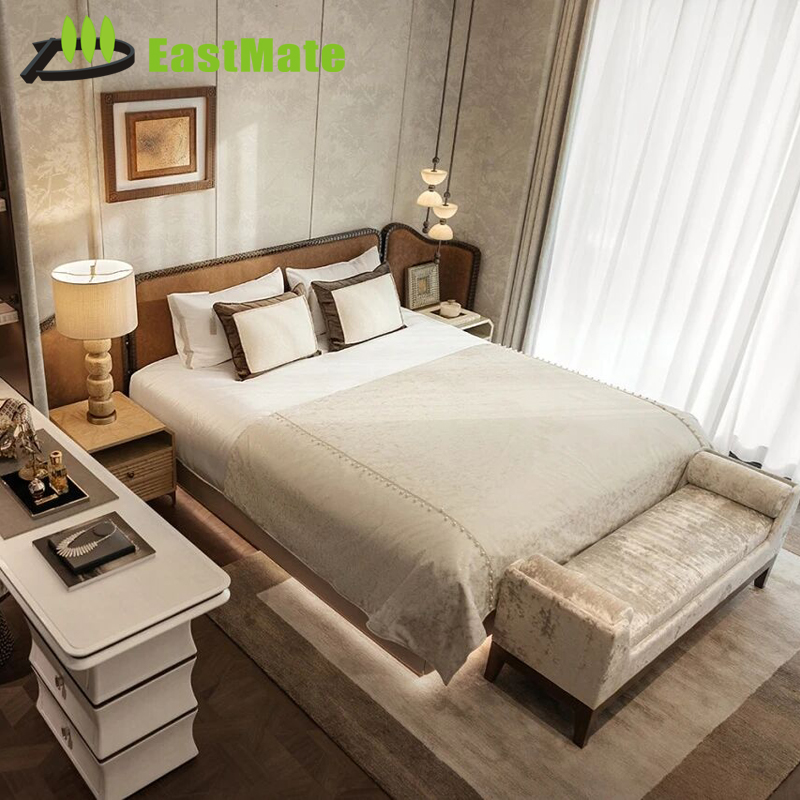
Complete architectural suite package featuring integrated acoustic headboards, floating nightstands with smart conduits, and reinforced luggage storage.
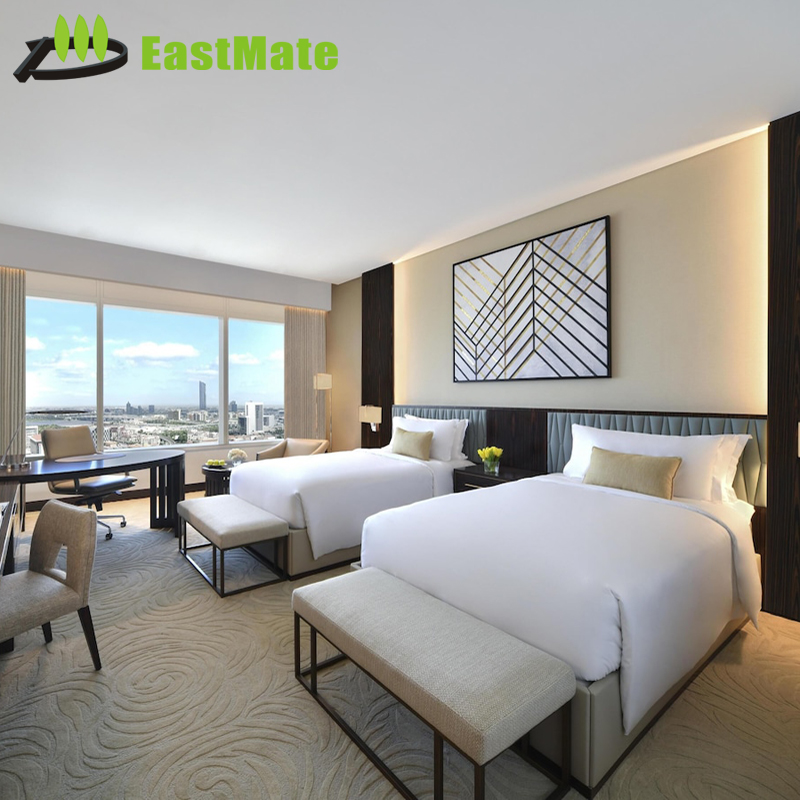
Value-engineered rubberwood and architectural veneer guestroom collection designed for high-density, midscale-to-upscale modular conversions.
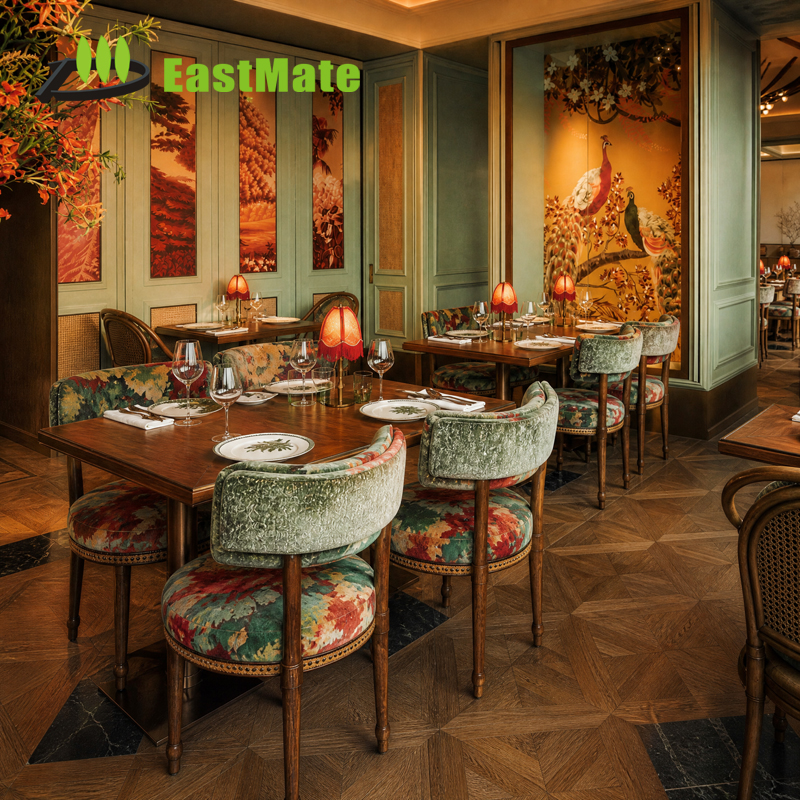
Heavy-duty mortise-and-tenon construction engineered for heavy resort dining operations. Scratch-proof coats preserve wood warmth over long service lifespans.
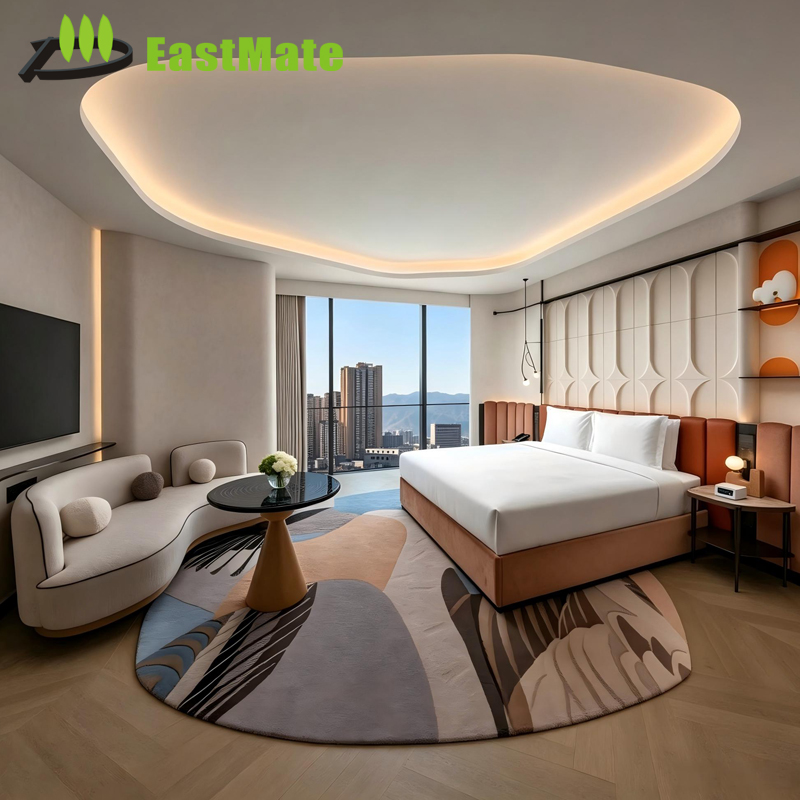
Integrated media credenza, acoustic wall panelling, and soft-closing joinery crafted with natural walnut veneer, brushed bronze trims, and E1 core boards.
Engineering Excellence: Inside the China Hotel Suite Furniture Manufacturing Ecosystem
Sourcing hotel suite furniture at an international wholesale scale requires far more than comparing initial price quotes. For hotel developers, design teams, and procurement agencies handling projects for brands like Marriott, Hilton, Hyatt, or boutique operators, furniture, fixtures, and equipment (FF&E) represent a major capital expenditure that directly impacts guest satisfaction, acoustic comfort, operational durability, and lifecycle maintenance.
Located in the heart of China’s hospitality manufacturing cluster in Lecong, Foshan, our engineering-driven facility bridges the gap between ambitious architectural renderings and structural, factory-ready execution. With 38,690 square meters of dedicated manufacturing floor space and 249 skilled professionals, we focus on high-precision casegoods production, fixed architectural joinery, and custom commercial upholstery. This setup prevents the common site delays and finish inconsistencies caused by splitting packages across multiple sub-vendors.
“Commercial suite furniture failures rarely stem from wood veneer flaws; they typically happen due to improper substrate stabilization, low-grade drawer glides, and missing expansion joints in high-humidity climates. Specifying multi-ply balanced plywood cores with balanced counter-veneers prevents surface warping under continuous PTAC/HVAC cycling.”
Why Tier-1 Hotel Projects Require Consolidated FF&E Manufacturing
A frequent challenge during hotel fit-outs is mismatched finishes across casegoods, loose seating, and wall paneling. When the headboard wall is sourced from one supplier, bedside cabinets from another, and wardrobe carcasses from a third, slight differences in wood stains, sheen levels, and substrate tolerances become obvious under guestroom LED lighting.
By producing guestroom suites, fixed joinery, and upholstered chairs in one facility, our teams run wood veneer selection, flitch sequencing, stain matching, and hardware boring across unified production schedules. Every grain direction, edge band, and concealed hinge functions as part of a coordinated system, making on-site assembly faster and cutting punch-list corrections before the hotel opens.
Parametric Shop Drawings
Our drafting team converts 2D design packages into detailed 1:1 millwork shop drawings, elevation models, and joinery schedules within 7 to 10 days.
Integrated Smart Connectivity
Pre-engineered raceways and CNC wire drop channels integrate flush power blocks, inductive wireless phone chargers, and hidden LED lighting tracks safely.
Full Mock-Up Validation
We build a full-scale prototype mock-up room to test joinery, finishes, structural rigidity, and packaging before launching serial production across hundreds of keys.
Future Sourcing Trends in Commercial Hotel Suite Furniture (2025–2030)
The hotel FF&E procurement landscape is evolving rapidly, driven by strict green building certifications (such as LEED v4 and WELL Building Standards), new modular construction methods, and rising guest expectations around tech integration. Procurement managers should plan for these major shifts over the next five to ten years:
1. Circularity, Low-VOC Chemistry & Sustainable Forestry Verification
Specifying basic FSC-certified wood is no longer enough for major international hospitality brands. Sustainable procurement now requires full visibility into the adhesive chemistry, veneer origins, and low-VOC surface treatments used across production lines. Leading hotel groups increasingly ban halogenated flame retardants and require ultra-low formaldehyde emissions matching CARB P2 and European E0/E1 standards.
Water-based polyurethane coats and plant-based UV finishes are quickly replacing solvent-heavy clear coats on high-wear surfaces like suite desks and luggage benches. These greener finishes provide comparable 2H–3H pencil hardness scratch protection and clean easily with commercial housekeeping chemicals, all while eliminating off-gassing so rooms can be occupied immediately upon delivery.
2. Factory-Integrated Electrification & Smart Architecture
Hotel nightstands, headboards, and desks are moving away from surface-mounted power extensions. The modern hotel suite requires concealed, pre-wired wire-management systems cut directly on multi-axis CNC machines during production. These integrate localized low-voltage DALI drivers, USB-C Power Delivery ports, soft-glowing night-path sensors, and master shut-off switching straight into the headboard panels. Factory integration protects wiring from accidental tugs and shortens on-site trade coordination between carpentry and electrical teams.
3. Modular Prefabrication & Pre-Hung Structural Panel Systems
Rising on-site labor rates in Europe, North America, and Australia have led procurement teams to move labor off-site and into the factory. Hotel suite headboard walls and TV backdrop media panels now arrive as interlocking, pre-engineered cassettes built with split-batten (French cleat) hanging systems and quick-connect blind wiring ports. Instead of spending several days installing individual trim pieces on site, two carpenters can hang a complete luxury suite headboard wall and entertainment console in under 45 minutes.
4. Hyper-Resilient Material Layering for Aparthotels & Extended Stay
With serviced residences and extended-stay aparthotels growing in popularity, suite furniture must handle luggage bumps, room service spills, and frequent guest turnover without showing premature wear. In response, designers increasingly combine ultra-matte sintered stone and continuous porcelain slab surfaces with solid wood framework. Sintered tops provide scratch, heat, and stain resistance for kitchenette counters and minibar credenzas, while warm wood veneers and acoustic upholstery keep the overall space feeling inviting and comfortable.
| Procurement Factor | Legacy Sourcing Approach | Next-Generation Sourcing Specification | Strategic Impact on Project ROI |
|---|---|---|---|
| Headboard & Wall Paneling | Site-built framing with basic stick-built veneer panels. | Factory-engineered split-batten cassettes with CNC wire management and acoustic felt dampening. | Cuts on-site fitting hours by 60% |
| Substrate Integrity | Standard particleboard core using solvent-heavy binders. | Multi-ply balanced birch/eucalyptus plywood, compliant with CARB Phase 2 & EN 13986 E1. | Prevents delamination and humidity warping |
| Drawer & Door Hardware | Generic unbranded slides with basic metal hinges. | Concealed soft-close undermount slides (50,000-cycle life) with 3D cam-adjustable hinges (Blum, DTC, or Hettich). | Eliminates door sag and guest complaints |
| Upholstery Fabrics | Standard domestic velvet or woven fabric with surface spray treatments. | Commercial solution-dyed yarns tested to 50,000+ Wyzenbeek double rubs, treated to CAL TB117 & BS 5852 Crib 5. | Complies with strict brand fire codes |
| Packaging & Protection | Loose paper sheets and thin 3-ply corrugated cartons. | Edge-protected 5-ply honeycomb export cartons, PE foam edge wraps, and coded room-by-room labels. | Minimizes ocean transit and handling damage |
Technical FF&E Quality Audit: What Every Procurement Team Must Verify
A good rendering doesn’t always guarantee a structurally sound finished piece. When choosing a wholesale hotel furniture manufacturer in China, procurement teams should look closely at how the factory handles basic structural detailing, substrate preparation, and finishing controls:
1. Moisture Equilibrium & Wood Species Selection
One of the main causes of cracking joinery and bubbling veneer in exported hotel furniture is moisture disparity between the manufacturing plant and the hotel location. Guangdong’s humid coastal air differs significantly from dry desert climates like Riyadh or climate-controlled interior air in New York winters.
Our facility runs vacuum drying kilns and monitored acclimatization staging areas, carefully stabilizing solid timbers (such as ash, rubberwood, oak, and beech) to target equilibrium moisture levels of 8% to 12% (±2%) before cutting. Counter-veneers are matched to front-facing veneers in both thickness and moisture content, ensuring panels stay flat without bowing or warping across seasons.
2. Substrate Integrity & Edge Sealing Precision
In high-turnover hotels, luggage corners, housekeeping carts, and spilled drinks frequently test furniture edges. While standard residential casegoods often use edge-banded low-density particleboard, 4-star and 5-star brand specifications call for high-density MDF or cross-laminated birch plywood. Critical impact areas—such as nightstand tops, suitcase benches, and desk edges—benefit from solid hardwood internal edges (sub-edging) hidden under the top veneer. This provides a clean profile while protecting core layers from impact damage.
Our End-to-End Hotel FF&E Production Workflow
A structured, stage-gated manufacturing path that keeps procurement teams, interior designers, and quantity surveyors fully aligned from drawing sign-off to site installation.
CAD / Shop Drawings
We review design intent, establish structural joinery details, and produce shop drawings with full finish schedules within 7–14 days.
Sample Approvals
Physical presentation submittals of custom-stained veneers, edge trims, fabrics, stones, and hardware finishes shipped express for sign-off.
Mock-Up Room Review
Full suite prototype built and inspected in our Foshan facility. Designers can review in person or via high-definition video walkthroughs.
Mass Run & Delivery
Precision CNC sizing, hand-finishing, continuous quality checks, room-coded export packaging, and flexible global delivery via FOB, CIF, or DDP.
Comprehensive Hotel Procurement FAQ
Straightforward answers to the technical, operational, and commercial questions purchasing agents and hotel developers ask us most when sourcing custom FF&E from China.
Q1: Can your factory build exactly to international brand FF&E design guidelines?
Yes. We regularly produce custom suite casegoods and joinery matched to brand specifications for groups like Marriott, Hilton, IHG, Accor, and Wyndham, as well as high-end independent boutiques. Our in-house engineering team translates architectural design concept books into fully engineered, brand-compliant shop drawings, specifying approved substrates, commercial-grade drawer glides, and fire-safe foam upholstery.
Q2: What are your standard lead times for mock-ups and mass production?
Detailed shop drawings and material swatch submittals generally take 1 to 2 weeks. A complete full-scale prototype mock-up suite is built in 3 to 4 weeks. Once the mock-up room is approved and the project deposit is confirmed, mass production typically takes 35 to 50 days, depending on key count, wood finish complexity, and architectural metal details.
Q3: How do you prevent veneer cracking and warping after export?
We stabilize all solid hardwoods and veneer substrates in monitored kilns and humidity-controlled holding rooms to reach destination-specific moisture contents (8%–12%). We also balance panels by pressing matching backing sheets on the reverse side of every veneered component, sealing all exposed edges with moisture-resistant PU barriers to keep panels stable through changing indoor conditions.
Q4: How is furniture packed to avoid damage during ocean transit?
We pack every piece using five layers of protective materials: PE foam wrap, heavy edge protectors, high-density corner guards, bubble barrier wrap, and 5-ply fluted corrugated export cartons. For items with stone tops, glass inserts, or delicate profiles, we pack them in fumigated wooden crates with internal dampening foam. Cartons are labeled by room number and piece type to make on-site staging quick and efficient.
Q5: Can you supply international fire-retardant certifications?
Yes. All upholstery foams and fabrics can be specified to meet British BS 5852 (Crib 5) fire standards or American California Technical Bulletin (CAL 117-2013 / CAL 133) requirements. We source tested materials directly from certified textile mills and foam producers, providing official batch test reports with your shipping documentation.
Q6: Do you support on-site installation coordination?
Yes. Along with sending detailed 3D step-by-step assembly diagrams and hardware hardware lists for your local general contractor, we can dispatch bilingual installation supervisors and experienced project managers to oversee placement, fit paneling to field dimensions, and manage the final punch list on site.
Ready to Engineer Your Hotel Suite Furniture Package?
Share your architectural floor plans, FF&E specification books, or reference renderings with our team. Our engineering department will review your drawings and provide detailed value-engineering recommendations, complete budget schedules, and material samples within 48 business hours.
Send an Inquiry